
Electroless Nickel for Aerospace Components
Performance advantages, process considerations, and production support for precision aerospace, defense, satellite, launch, and high-reliability manufactured components.
Why electroless nickel remains important in aerospace manufacturing.
Electroless nickel is an autocatalytic coating process used to deposit a nickel-phosphorus layer without relying on external electrical current.
Because the deposit forms through a controlled chemical reaction, electroless nickel can provide highly uniform coverage across intricate surfaces, threads, recesses, internal features, and precision-machined geometries that may be difficult to coat consistently through conventional electroplating.
This makes EN valuable for aerospace, defense, satellite, launch, UAV, connector, and precision hardware applications where corrosion resistance, dimensional consistency, surface durability, and repeatable manufacturing performance are important.
The coating itself, however, is only one part of a successful process. Surface preparation, bath chemistry, temperature, filtration, agitation, equipment condition, replenishment, rinsing, post-treatment, and inspection all influence production results.
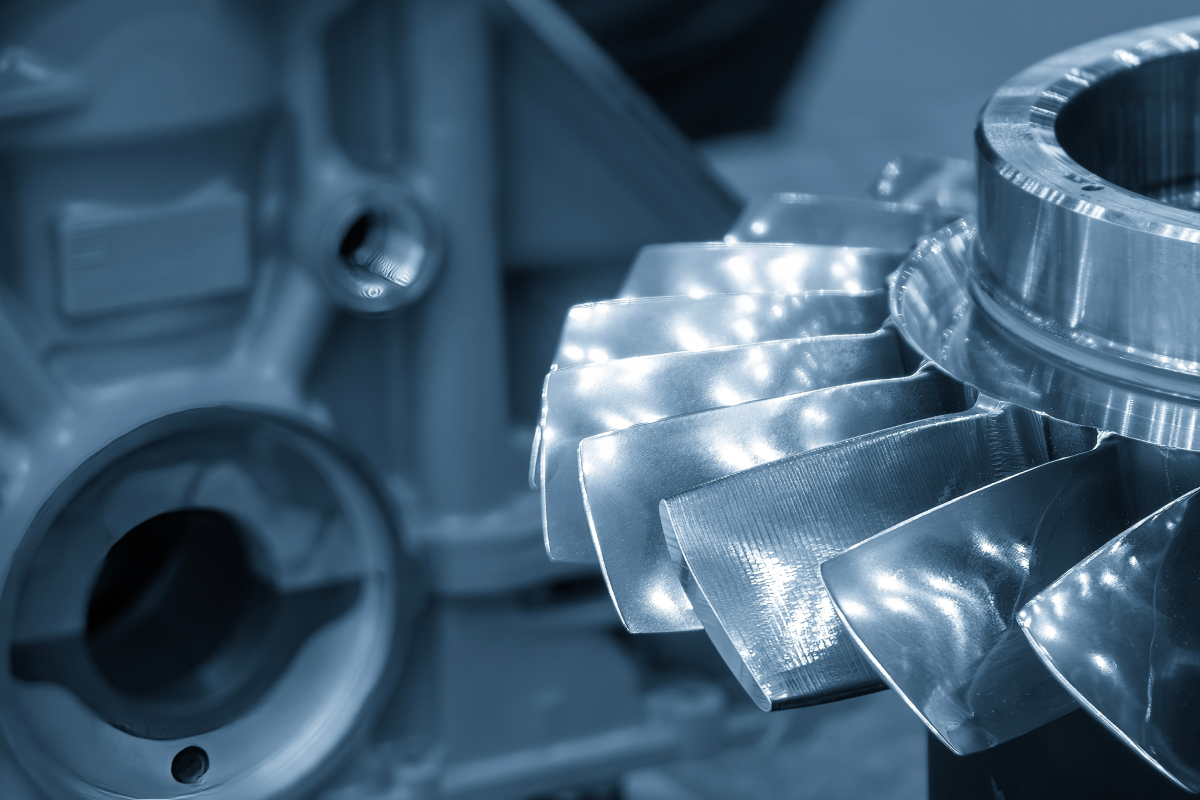
Performance advantages for complex aerospace components.
The value of electroless nickel is not limited to appearance. It is selected for functional performance across components with demanding geometry, tolerance, and operating requirements.
Uniform Deposit Thickness
EN can deposit consistently across threads, recesses, internal surfaces, bores, edges, and complex shapes without the current-density variation associated with electrolytic plating.
Corrosion Resistance
Properly selected and controlled EN coatings can help protect components operating in moisture, salt, chemical, and demanding service environments.
Wear Performance
Nickel-phosphorus deposits can improve hardness, surface durability, and wear performance for components exposed to repeated contact or movement.
Dimensional Consistency
Predictable coating thickness can support precision-machined parts where dimensional control, fit, and repeatable finishing results matter.
Complex Geometry
The autocatalytic process is well suited for intricate hardware, housings, fittings, machined features, and components that are difficult to plate uniformly.
Functional Surface Engineering
EN can be selected and managed as an engineered functional coating rather than simply a decorative metal finish.
Where electroless nickel supports aerospace and defense components.
Application suitability depends on component material, service environment, coating specification, phosphorus level, heat treatment, thickness, and the complete finishing process.
Aircraft Components
- Precision-machined hardware
- Hydraulic components
- Fittings and housings
- Actuation components
Satellite Hardware
- Mounting hardware
- Connector housings
- Structural components
- Precision mechanical assemblies
Launch Systems
- Mechanical assemblies
- Support hardware
- Ground systems
- Precision-machined components
Defense Electronics
- Connector components
- Electronic housings
- Shielding hardware
- Precision interfaces
UAV and Autonomous Systems
- Lightweight hardware
- Aluminum components
- Mechanical systems
- Connector assemblies
Aerospace Supply Chains
- Contract manufacturers
- Machine shops
- Approved finishing suppliers
- Special-process facilities
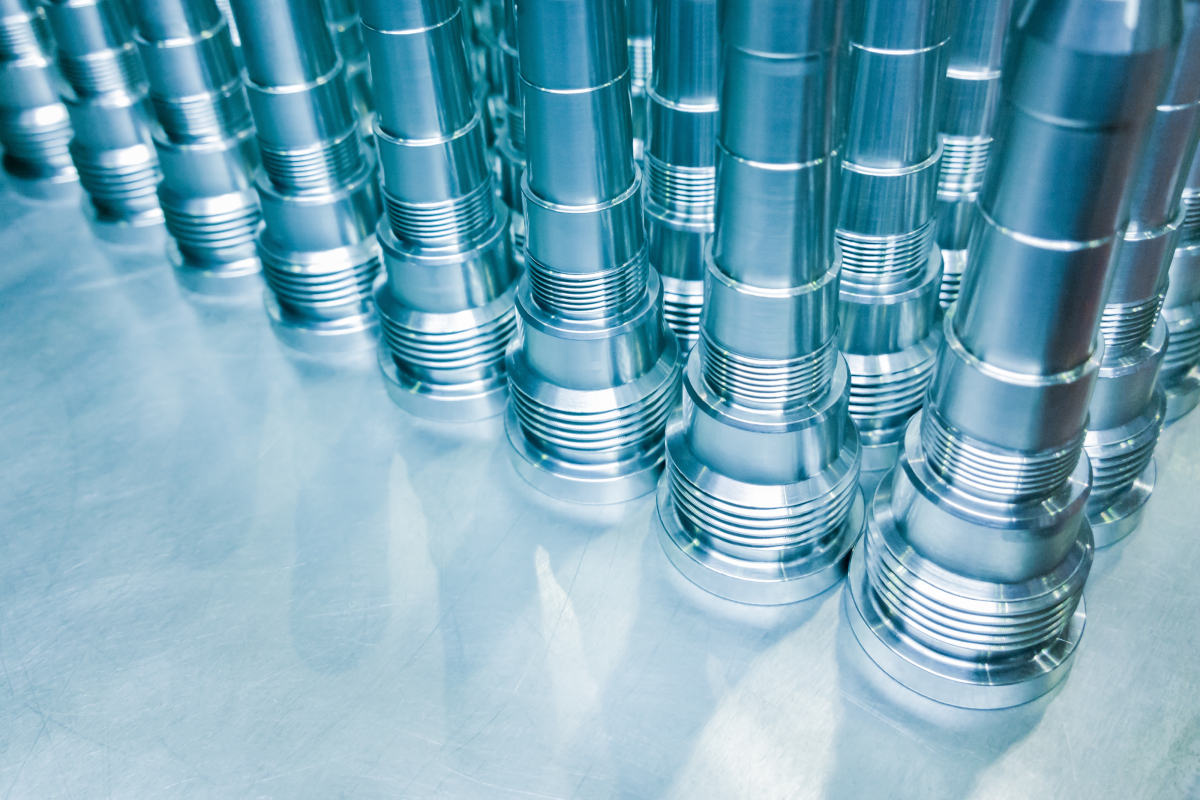
A successful aerospace EN process depends on more than the plating bath.
Coating performance begins before the component enters the electroless nickel tank and continues through rinsing, post-treatment, inspection, and ongoing bath management.
Variability in cleaning, activation, temperature, loading, agitation, filtration, replenishment, contamination control, or equipment condition can affect adhesion, deposit quality, phosphorus content, coating uniformity, bath stability, and production reliability.
Phosphorus level influences coating properties and production behavior.
Low, medium, and high-phosphorus electroless nickel systems offer different balances of hardness, corrosion resistance, deposit characteristics, and operating performance.
Hardness and Wear
Low-phosphorus EN is generally associated with higher as-plated hardness and may be selected where wear performance is a primary requirement.
Balanced Performance
Medium-phosphorus EN can provide a practical balance of corrosion resistance, hardness, deposition behavior, bath performance, and production efficiency.
Corrosion Resistance
High-phosphorus EN is often selected for enhanced corrosion resistance and applications requiring a more amorphous deposit structure.
Supporting the full electroless nickel production environment.
Ronatec supports electroless nickel operations with chemistry, process equipment, controls, calibration, troubleshooting, and lifecycle services.
Chemistry and Bath Support
- Medium- and high-phosphorus EN systems
- Bath make-up and replenishment products
- pH and bath-management tools
- Troubleshooting and application support
- Post-treatment products
Equipment and Process Control
- Electroless nickel process tanks
- Filtration and solution circulation
- Temperature control
- Ventilation systems
- Chemical feed and automation
Lifecycle and Compliance Support
- Calibration services
- Equipment maintenance and repair
- PLC and controls support
- System modernization
- Process and safety evaluation
Supporting recognized aerospace and high-performance requirements.
Electroless nickel processing may be governed by customer drawings, internal specifications, industry standards, approved process lists, and specific inspection or testing requirements.
The Ronatec Difference
- Electroless nickel chemistry and application expertise
- Process equipment and tank fabrication
- Filtration, ventilation, heating, and control support
- Calibration and compliance-related services
- Maintenance, repair, and modernization
- Wastewater treatment support
Why integrated support matters in aerospace finishing.
Chemistry, equipment, controls, maintenance, calibration, and operator practices are interconnected.
A stable bath cannot compensate indefinitely for inconsistent pretreatment, inadequate filtration, uncontrolled temperature, unreliable pumps, poor rinsing, or outdated controls.
Ronatec helps customers evaluate the process as a complete manufacturing system. That broader perspective can simplify troubleshooting, support production reliability, and help teams identify whether an issue begins with chemistry, equipment, controls, maintenance, or process execution.
Continue exploring aerospace, defense, and space manufacturing support.
Electroless nickel for aerospace components.
Why is electroless nickel used for aerospace components?
Electroless nickel is often selected for its uniform deposit thickness, corrosion resistance, wear properties, and ability to coat complex geometries without relying on electrical current distribution.
Can electroless nickel coat threads, recesses, and internal features?
Yes. Because EN deposits chemically, it can provide consistent coverage across many complex surfaces, threads, recesses, and internal features, subject to proper solution access, preparation, and process control.
Which phosphorus level is best for an aerospace application?
Selection depends on the component specification, corrosion requirement, hardness, wear, substrate, thickness, heat treatment, and service environment. The drawing and applicable process specification should control the final selection.
What factors affect electroless nickel bath performance?
Bath age, loading, temperature, pH, replenishment, filtration, agitation, contamination, pretreatment, drag-in, equipment condition, and operating practices can all influence deposit quality and bath stability.
Does Ronatec provide equipment as well as EN chemistry?
Yes. Ronatec supports EN operations with chemistry, tanks, filtration, ventilation, temperature control, automation, calibration, maintenance, repair, modernization, and process consulting.
Can Ronatec support an existing aerospace plating line?
Yes. Ronatec can help evaluate chemistry, equipment condition, controls, filtration, temperature systems, ventilation, calibration, maintenance needs, and opportunities to improve an existing line.
Need support for an aerospace electroless nickel process?
Whether you are evaluating chemistry, qualifying a new process, troubleshooting an existing bath, or planning equipment and control improvements, Ronatec can help identify practical next steps.